
Gulf County Busted Mugshot Records
Booking starts the moment someone is brought in after a Gulf County arrest. Officers hand over the charge and probable-cause paperwork. Jail staff then take over. They log the name, the time, and the alleged offense. They assign a booking number and take the mugshot. Who keeps the paperwork depends on who made the arrest. The county, not the sheriff, runs the Gulf County Detention Facility. The Sheriff's Office may write the report and post a photo, while the jail keeps its own file. Port St. Joe Police holds separate reports. The Gulf County Clerk keeps the court case.
The online tile is just a sliver of the record. Expect a name, an image, an arrest date, the charge wording, and the agency involved. Bond amounts, release dates, and custody status often are missing. The photo marks an intake, nothing more. Charges can change or vanish after booking.
Gulf County Booking Record Fields
No single Gulf County public screen displays the whole booking sheet. The GCSO publication shows a narrow set, while the underlying jail and arrest files can hold much more. Florida’s criminal-justice retention schedule describes intake forms, a booking card, the probable-cause account, arrest histories, release papers, and officer data. A precise request should name each record sought instead of asking for “everything.”
| Field | What it shows |
|---|---|
| Name and identifiers | The identity used for the intake; compare suffixes and aliases with care. |
| Booking or report number | The local key used to connect jail intake and agency records. |
| Arrest and booking times | Separate events that may differ from the web posting time. |
| Charges as booked | The charges presented at intake. |
| Agency and officers | The office responsible for the arrest and booking action. |
| Custody and release papers | Documents on detention, release terms, or transfer where public. |
| Booking photograph | An identification image taken or released in connection with intake. |
What if two records share a name? Use numbers as the bridge. A booking number, police report number, clerk case number, FDC DC number, federal register number, and ICE A-number belong to different systems. Compare dates, agencies, and record numbers. A face alone is not a sound identity match.
Note: Arrest date, booking date, posting time, and court filing date describe different events and should not be merged.
Request Gulf County Busted Records
The custodian split controls the request route. Ask GCSO for a sheriff arrest report or GCSO photograph. Ask the county detention facility for the booking card, intake image, custody or release record, or a date-bounded commitment and release list. A Port St. Joe police report belongs with that department. Court judgments and dispositions belong with the clerk. Florida public-record law requires prompt acknowledgment and a good-faith response, but it sets no fixed number of days for every request.
- Give the full name, approximate arrest date, arresting agency, and any known booking, report, or case number.
- Name each item: booking sheet, arrest report, probable-cause paper, release record, and original photograph.
- Ask for electronic delivery and a cost estimate before work that will incur a charge.
- Send jail-file requests to the Gulf County Detention Facility and sheriff-report requests to the GCSO Records Custodian.
- Keep the response and any cited exemption, then use the clerk docket to follow the case outcome.
Want a copy of a booking photo or arrest record from Gulf County? You will have to contact the Sheriff's Office directly. The agency offers no online request form, no posted email for records, no fee schedule for mugshots, and no stated office hours or turnaround window. The jail publishes nothing on booking-photo fees either. So call first and ask what the office needs from you. Florida Statute 119.07 does set some cost ceilings: up to 15 cents per one-sided page, two-sided copies for five cents more, other formats at actual duplication cost, and a dollar at most for certification. Work that takes real staff time can add a service charge based on actual cost. Those caps are statewide limits, though. They do not tell you what an electronic request in Gulf County will run. Always request an estimate in writing before committing.
Gulf County Detention Facility1000 Cecil G. Costin Sr. Blvd.
Port St. Joe, FL 32456
850-227-1124
gulfcountyjail@gulfcounty-fl.gov
Note: A clerk court-copy price does not establish the sheriff’s or detention facility’s charge for a booking photograph.
Florida Busted Mugshot Law
Florida's Chapter 119 opens a wide door. It covers photographs and nearly any material an agency makes or receives while doing public business, unless an exemption applies. Public status still does not force a sheriff to keep a mugshot posted forever. Florida Statutes § 901.43 aims at one target: commercial booking-photo publishers. A publisher under the law cannot charge anyone to take a photo down. The person pictured, or a legal representative, mails a written request to the publisher's registered agent by registered mail, with enough identifying detail. Ten calendar days after receipt, the covered publisher must remove the image free and keep it off for good.
The statute is not a delete button for everything. It does not order courts, agencies, or news outlets to purge their pages. Start where the record lives. If a photo shows the wrong person, is a duplicate, contains factual errors, or was posted against an exemption, tell the controlling office directly. For a covered commercial publisher, the statutory path costs nothing. RecentlyBooked says it honors supported claims without charge, and Mugshots.com lists free record-maintenance routes for certain court orders, identity errors, and dispositions. Arrests.org publishes contact information. Opting out of ad personalization there has nothing to do with removing a record. No local BustedNewspaper or Mugshots.zone section was verified. So treat no generic or nearby page as Gulf County coverage.
Sealing and expunction are different animals. They are court remedies, not quick edits to a web tile. The FDLE seal and expunge process starts with a Certificate of Eligibility, then a petition in the court with jurisdiction over the case. Eligibility turns on the charge and the person's full history. A dismissal alone does not guarantee relief. One more thing: FDLE cannot compel every private site to destroy a copy it lawfully grabbed while the record was public. And never pay a removal vendor for something the statute already forces covered publishers to do for free.
Search engines add a final layer. After the source page is deleted or materially changed, verify that both the live page and the image are truly gone. Then submit the exact URLs to Google's outdated-content refresh tool or Bing's content-removal tool. The engines will refresh their cached copies. They will not delete a publisher's live source. For the full booking-photo rules, the official Florida statute page has the text at its origin.
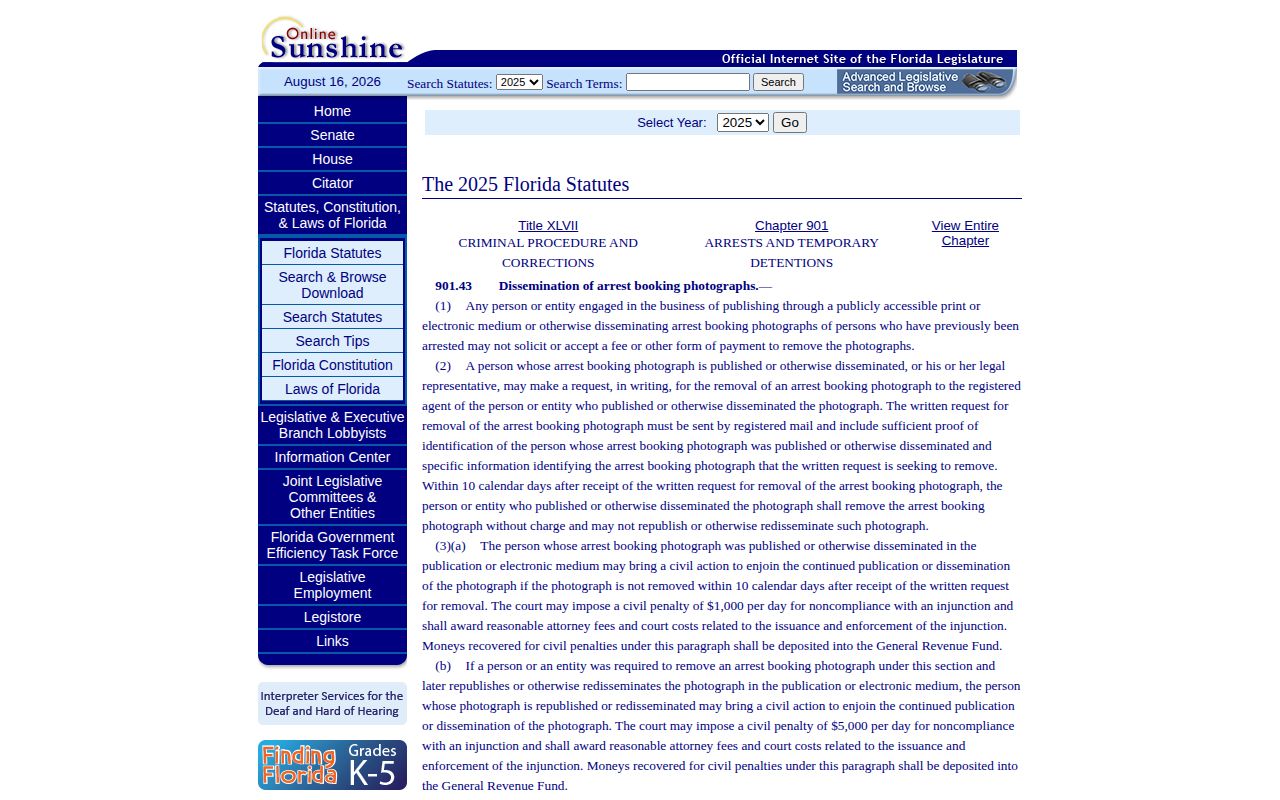
Read that source closely and the boundaries become clear. It keeps the covered-publisher removal process separate from sealing, from expunction, and from the corrections an official records custodian can make on request.
Gulf County Juvenile Arrest Records
Juvenile records work differently in Florida. The law shields most juvenile proceedings, so a child's name, address, photo, and arrest report stay confidential by default. That protection lifts in certain situations. Felony-equivalent conduct, certain adjudications, or transfer to adult court can open the record to the public. So it's simply wrong to say every juvenile image is secret, and equally wrong to claim all of them are open. Other limits apply too, including sealed files, victim information, active-investigation material, and identities the statute protects.
What about a blank result? A missing photo proves nothing in Gulf County. The image may have aged off the short display window, been withheld lawfully, come from another arresting office, or simply never been posted. Ask the record custodian for a written explanation rather than guessing.
Gulf County Booking Photo Exemptions
Yes, the GCSO publishes arrest photos. No, that doesn't mean every image is public. Florida exemptions can still protect a specific photograph. One example: a current or former law-enforcement officer whose image qualifies for protection can keep it withheld after the required written request. Protected identities and active investigative material can also limit access. The real question is whether that particular image is public under the statute and the facts, not whether Gulf County posts mugshots as a habit.
Custodians can split a record. They may release the public portion while withholding the exempt photo, and they should cite the authority for anything held back. Asking that way keeps things clear. A missing online tile, a photo that aged off the page, and a legally exempt image are three different situations, and this distinction keeps them separate.
Gulf County Mugshot Archives
Online display and record retention run on separate clocks. GCSO keeps arrest photos visible for roughly two weeks. Florida's retention rule, GS2 Item 16, requires booking records to be kept at least one anniversary year after release. Commitment and release lists and inmate incarceration records carry similar minimums. That one-year mark is not a destruction date. It also promises nothing about web access. A file can last longer under another series, an operational need, or a legal hold.
Older Gulf County material starts with whoever created the record. Ask the GCSO or Port St. Joe police for the arrest file. Ask the detention center for its booking file, and the clerk for the docket. Then find out whether an old file was destroyed under an authorization, relocated, filmed, or kept in another series. The State Archives of Florida research portal holds permanent state records and some local ones. It does not hold every county mugshot. Catalog entries are descriptions, not digitized images. No dedicated Gulf County historical mugshot collection exists there.
The State Archives interface shows the last-resort research path.

A strong archive request names what you want: the record series, the date span, the agency, and any collection or container numbers you know.
Note: A two-week photo display, one-year minimum retention, and permanent historical custody are three different concepts.
Find Gulf County Busted Mugshots
Start by figuring out the custody stage. Someone freshly posted by GCSO comes from one source, while a person still held, released, sent to state prison, or held federally comes from others. This order prevents a common error. An old arrest photo does not mean someone is still in jail.
- For a recent GCSO publication, search the official Arrests page by name and note its date, charge text, agency, and posting time.
- For present county custody, use the official GCSO app inmate search or call the county detention facility.
- For a released person, request the booking and release file, then search the Gulf Clerk case for filed charges and disposition.
- For a sentenced Florida prisoner or state-supervised felony offender, search FDC by name, alias, or DC number.
- For federal or immigration custody, use BOP or ICE status tools, which do not serve as public mugshot searches.
- For an older image, request the creator’s file before trying state or federal archives.
Conflicting results happen, so compare the details. Check spelling, aliases, suffixes, dates, the arresting agency, and any identifiers. Someone can linger on the GCSO page after release because that page only shows recent publications. A person can appear in the current-inmate app yet be missing from GCSO Arrests, maybe because another agency handled the booking or the photo window closed. A posting gap or withheld photo explains it too. Neither pattern tells you much on its own.
Gulf County Busted Feed Timing
One official photo feed exists. That's it. The GCSO Arrests page uses a free-text name search and event-based posts. The agency says photos display for about two weeks. Nothing official promises instant posting. The arrest date can precede the page timestamp. Same-day, 24-hour, 48-hour, 72-hour, and seven-day feeds do not exist for Gulf County.
- Same day through 72 hours
- No separate official Gulf County page exists; posts may appear event by event and can lag.
- About two weeks
- GCSO Arrests is a recent photo-bearing publication, not proof of current custody.
- Current custody
- The GCSO app or detention facility gives a point-in-time status.
- Historical period
- A written request can seek a date-bounded booking or commitment and release list.
For who was recently published, the official GCSO feed interface is the smartest first stop.
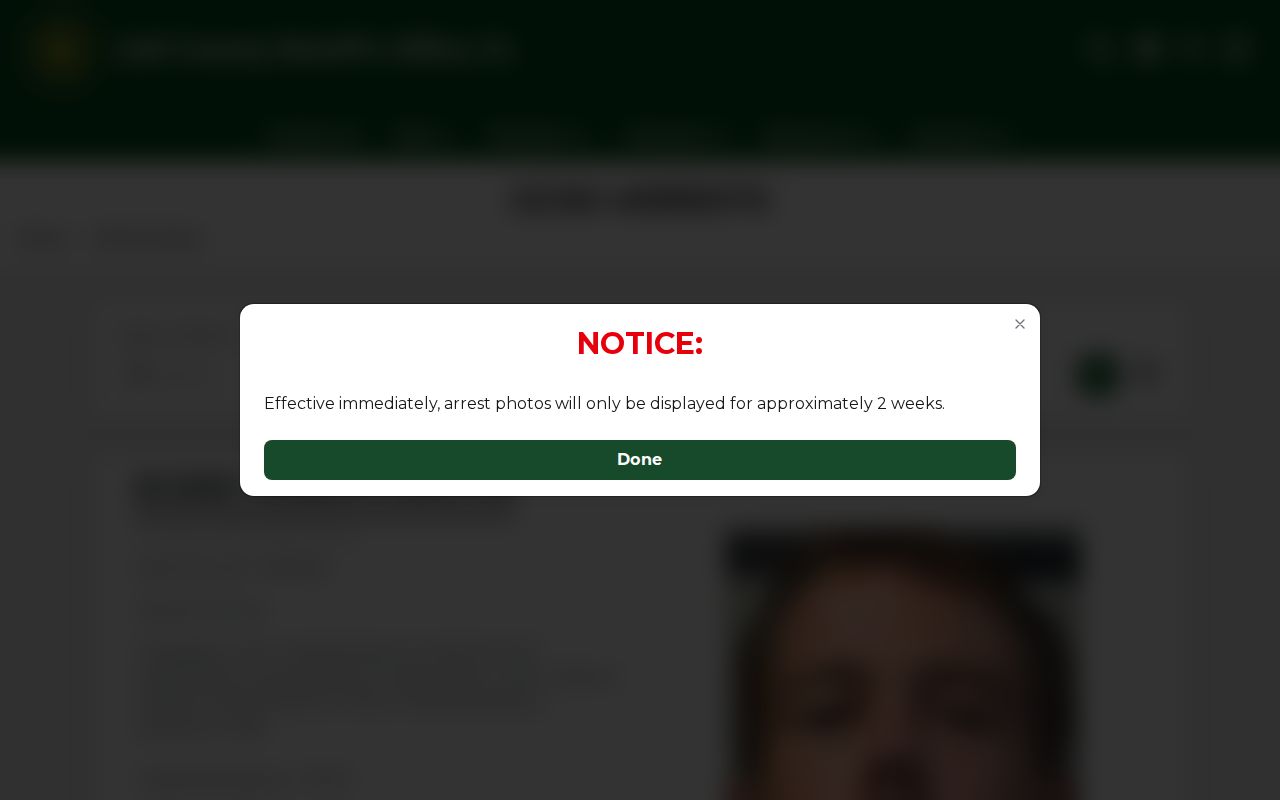
The feed's short window and thin fields mean a blank search can't rule out an arrest.
No official weekend schedule exists. No documented weekend surge exists either. To rebuild a weekend, request the exact date range. Don't count Monday's tiles as the full picture.
Note: The GCSO News Digest preserves selected stories, but it is not a complete arrest log or booking archive.
Gulf County Busted Custody Search
Gulf County has no official browser-based jail roster. The detention page lists facility contacts but no inmate list. The GCSO mobile app fills that gap, and its store listing advertises a search for people incarcerated at the Gulf County Detention Facility. What the app actually shows is another matter. The store text names no search fields and promises no photos, so don't assume it displays bond, charges, release dates, booking times, or images without checking a live result.
| Search item | Verified status | Use |
|---|---|---|
| Person’s name | Inmate search advertised | Enter available name information in the app. |
| Current custody | Verified app purpose | Confirm at a point in time, then call the jail if needed. |
| Booking photo | Not promised | Do not infer a photo from marketing copy. |
| Charges, bond, release | Fields not published | Inspect the live result or request the jail record. |
- Open the official GCSO app and use the inmate-search feature with the name information available.
- Read only the fields the current result actually displays; do not infer a photo, bond, or release date.
- Call the Gulf County Detention Facility when the app is unavailable, a name is missing, or current status needs confirmation.
The official GCSO app page documents the mobile access route.
Current incarceration lives in the app, while recent arrest photos live on the website. If the app fails or you need a status fast, call the facility at 850-227-1124.
Where Gulf County Mugshots Appear
Official sources should anchor any Gulf County search. Secondary sites can help with a spelling or a date. But they drop cases, carry stale charges, mislabel cities, and lag behind court updates. Whatever you find, verify it with the agency, the jail, or the clerk.
| Channel | Photo? | Status and access |
|---|---|---|
| GCSO Arrests | Yes | Official recent list; about a two-week display. |
| GCSO app | Unconfirmed | Official current-inmate search; device check required. |
| Detention file | When public and held | Official request fallback for booking and release records. |
| Gulf Clerk | Not the photo source | Official filed charges, docket, judgment, and disposition. |
| FDC | Where available | Official state-prison or state-supervision profile. |
| RecentlyBooked | Often | Unofficial 30-day publisher claim; may be delayed. |
| Arrests.org / Mugshots.com | Varies | Unofficial archives; results can be empty or stale. |
GulfCounty.news and WJHG both run crime coverage for the area. What they post is selective, though. A story may include an agency photo, but neither outlet keeps anything close to a full booking log. RecentlyBooked takes a different approach with a dedicated Gulf County section that it says refreshes often. Arrests.org lets you browse by county and year, but its Gulf pages show no current listings. placeholder
Mugshots.com has Gulf County filters too, though its listings seem to stop around 2021. Two other popular sites, BustedNewspaper and Mugshots.zone, have no confirmed Gulf County section at all. Treat all of these as leads rather than answers. Official records still matter most here.
Note: An unofficial county page can show no current result, and that absence proves nothing about a person’s custody.
Gulf County Booking Outcomes
Florida law sets a fast clock after an arrest. A first appearance before a judge must happen within 24 hours. The judge walks through the charge and explains the arrested person's rights. The judge also sets conditions for pretrial release. That deadline applies to the courtroom, not the internet. A mugshot or docket entry can take longer to appear online. In Gulf County, felonies and delinquency cases go through Circuit Court. County Court takes misdemeanors and criminal traffic matters.
What happens next shows up in the Gulf Clerk record-search gateway. Try spelling variations of a name. Or plug in a case number if you have one. The docket can reveal filed counts, hearing dates, pleas, orders, a judgment, a sentence, a dismissal, an acquittal, or a decision by the prosecutor to drop the matter. Some deeper online access requires registration. Confidential papers stay sealed from view. The clerk gateway is what connects an arrest to how the case actually ended.
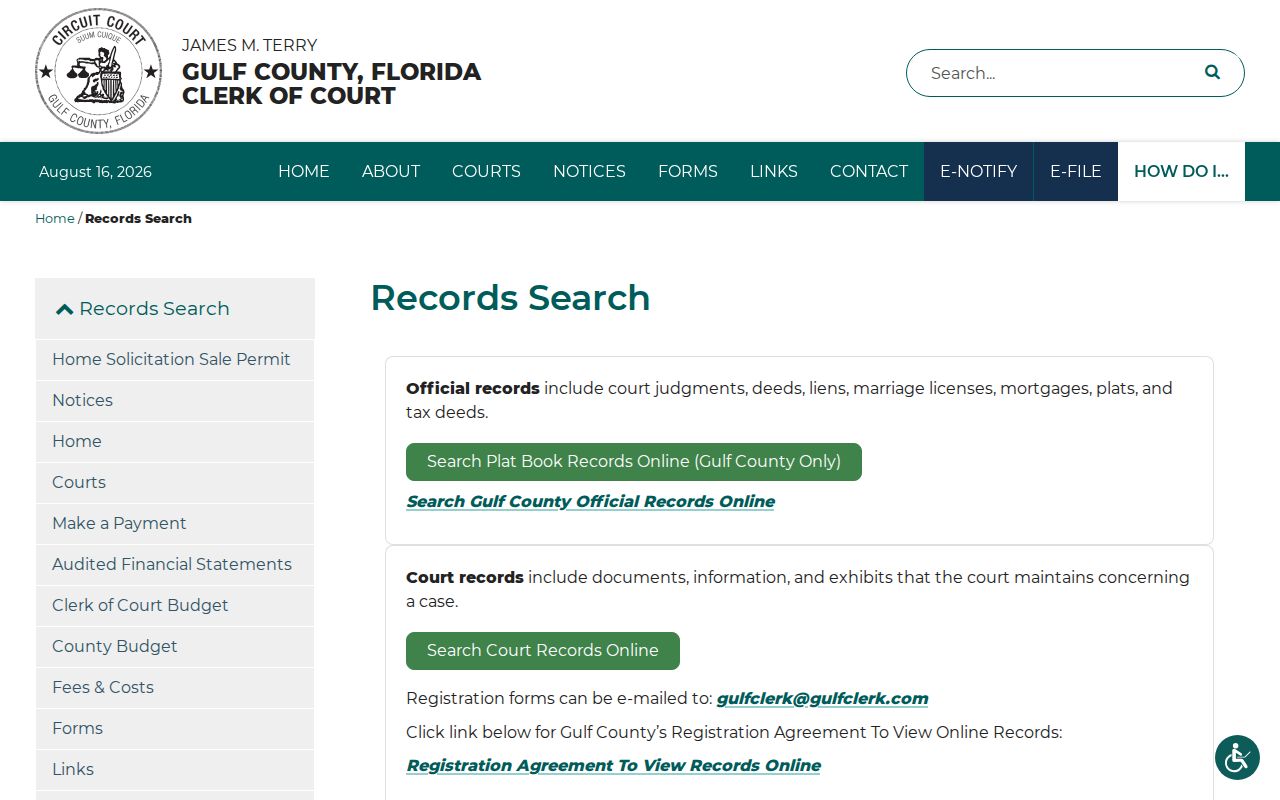
Need something certified? Ask the clerk for the judgment and sentence. Old felony files may sit in off-site storage, so expect a wait. Copy fees and delivery times apply to court documents only, never to sheriff mugshots.
- Booking
- Administrative intake after an arrest.
- First appearance
- The first judicial review of charge notice and release conditions.
- Arraignment
- A court stage when the accused answers the filed charge.
- Bond
- A financial or other condition tied to pretrial release.
- Disposition
- The recorded outcome of a court case.
- Expunction
- A court remedy that limits access under specific Florida law.
Note: The clerk docket, not the original Gulf County booking allegation, records the filed charge and final disposition.
Gulf County Criminal Case Search
One search gateway covers all of Gulf County. The charge decides which court handles the case. Felonies and delinquency matters go to Circuit Court. Misdemeanors and criminal traffic cases belong to County Court. Search with the filed case number whenever you can. A number beats a name, and it ties every later docket event to the right prosecution. Keep in mind that a booking charge alone may not match what the prosecutor ultimately files.
A search that returns nothing tells you less than you might think. Try alternate spellings and confirm whether a case number was ever assigned. A report can exist with no charge filed, a name search can simply miss, or access may be restricted. The arrest report itself stays with GCSO or Port St. Joe police. The clerk is the one who can tell you whether a charging document ever reached the court.
Gulf County Busted Status Changes
A sentence can move someone out of county hands entirely. The Florida Department of Corrections (FDC) offender search takes a first name, last name, aliases, or a six-character DC number. Profiles often include a photo, status, location, offenses, and sentence details. FDC tracks qualifying state prisoners and supervised felony offenders. It skips anyone serving only county jail time, county probation, or another non-FDC program. Population data refreshes weekly, and some release and location details update nightly.
Federal tools exist too, each with quirks. BOP covers federal custody since 1982 and updates daily. Its public results show no photos. ICE can find many current detainees plus some people released recently from ICE custody, also without mugshots. Marshals Service prisoner photos stay off-limits to the public. Treat these as fallbacks for tracking status, not replacements for the Gulf County Detention Facility.
Where does the record live after release? A current inmate may still show in the app. A GCSO tile can linger after release. The underlying jail and arrest files take a records request. A qualifying sentenced offender may surface later in FDC, and the clerk docket remains the spot for the prosecution's final result.
Gulf County Arrest Alerts
Gulf County offers three notification tools. Each answers a different question. The GCSO app bundles current-inmate search, recent arrests, tips, news, sex-offender lookups, and public alerts like traffic and weather. Its launch notice also covers victim requests for custody-status change notifications. Florida VINE handles custody checks and change notices across county jails, FDC, and juvenile justice. It is not a mugshot feed.
Florida E-Notify kicks in only once a court case exists. It sends free reminders for criminal and most civil court events, with advance options listed by the clerk. It will not tell you about a new arrest. The GCSO News Digest and app pushes highlight selected cases, but quiet channels do not mean nobody was booked. Let alerts give you the heads-up. Then verify with the source that actually controls that custody or case stage.
Note: Sheriff alerts, VINE custody notices, and clerk court reminders track different events and do not replace one another.
Gulf County Busted Mugshot Cities
Two incorporated cities make up Gulf County. Port St. Joe runs its own police department, yet everyone its officers arrest gets booked at the Gulf County Detention Facility. No city blotter or booking search exists, so report requests go to the city while current custody checks go to the app or the facility. Port St. Joe Busted Mugshots breaks down that split.
Wewahitchka takes a simpler path. The city has no police department of its own and contracts with GCSO for law enforcement, so there is no missing city feed to hunt for. Arrests route through the sheriff, custody through the county facility, and filed cases through the clerk. Wewahitchka Busted Mugshots traces that sheriff-to-jail chain. One more note: Gulf Correctional Institution, located in Wewahitchka, is an FDC state prison, not the county's booking destination.